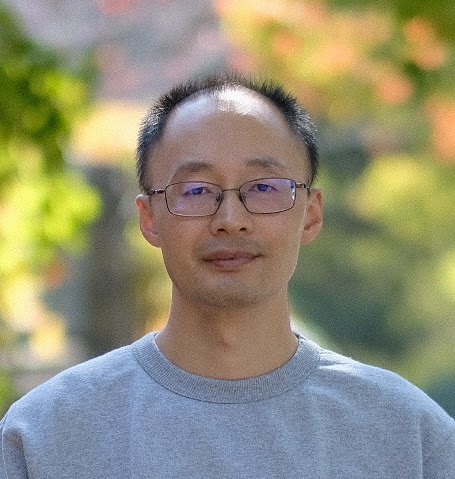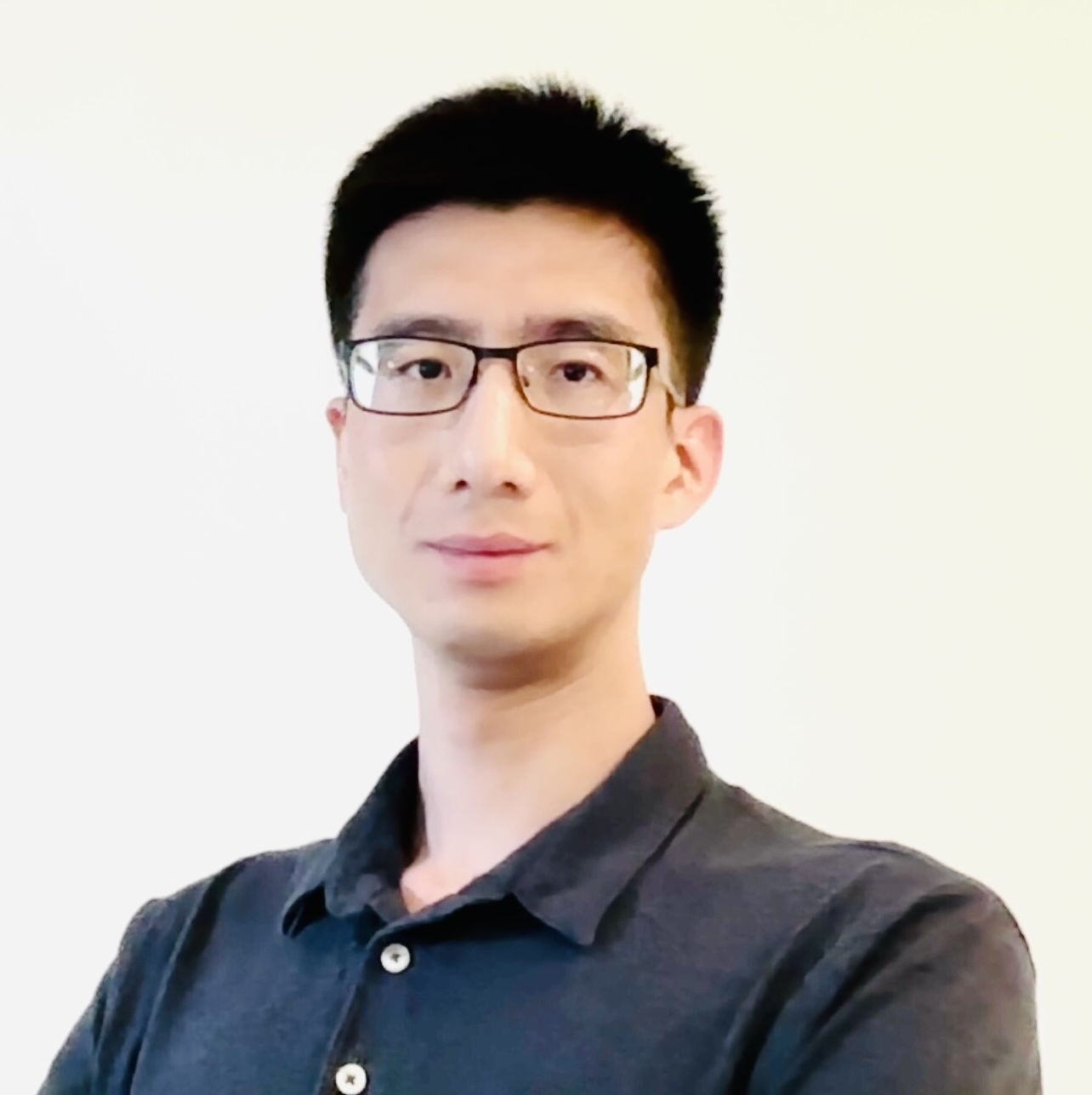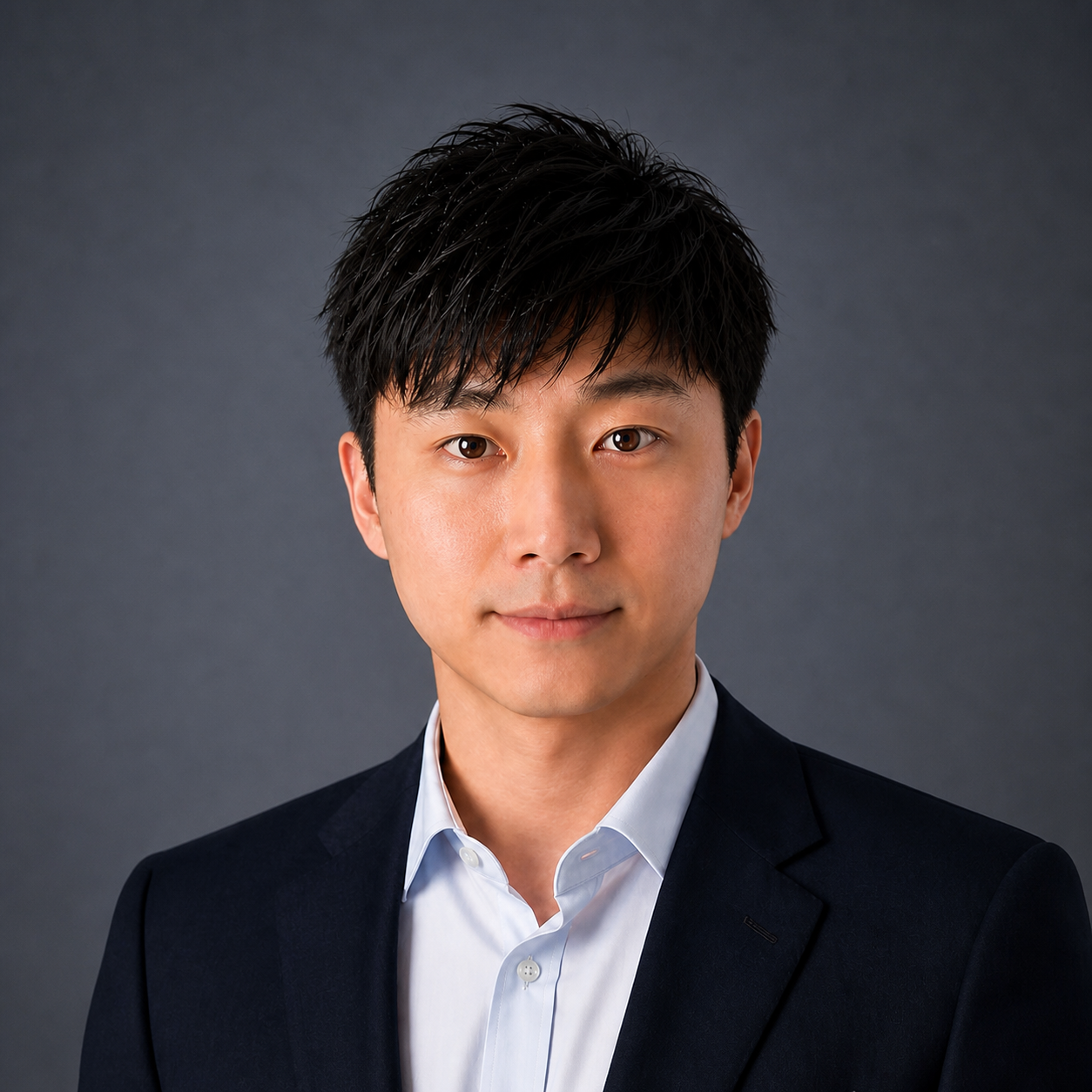
Zhiguang (Stephen) Wang
Founder & CEO, Abel Lab
Biography
Zhiguang Wang is the founder of Abel Lab, a research organization built around temporal superintelligence: machine intelligence capable of reading, predicting, and intervening in any system that evolves over time. Its first embodiment is the Temporal World Model, which forecasts through a learned dynamical operator whose spectrum is constrained by a discovered causal graph.
His research includes several foundational contributions to modern time-series foundation models. The field’s standard review (Ismail Fawaz et al., DMKD, 2019) identified his temporal FCN and ResNet architectures as reference models against which new methods should be evaluated; nine years later, they remain standard baselines. As early as 2015, he encoded time series as images so that vision models could read them through Gramian Angular Fields and Markov Transition Fields (GAF/MTF, IJCAI 2015). Vision-foundation forecasters returned to this construction in 2024.
As a Principal Researcher at frontier AI labs including Meta and Snap, he led the research and deployment of Facebook Assistant’s dialogue reasoning and state-tracking systems. Meta developed his task-persistence architecture for long-horizon, complex tasks into a four-patent continuation family. These patents have been widely cited in LLM-agent filings by Apple, Google, Amazon, and Microsoft. At Snap, his work spanned multimodal understanding, foundation models, and large-scale systems. His GE Research patent on industrial augmented reality has been cited across filings by Rockwell Automation, Siemens, and Boeing.
He has served as Area Chair for NeurIPS, CVPR, ACL, IJCAI, NAACL, EMNLP, and COLING. He received his Ph.D. in Computer Science from the University of Maryland at Baltimore under Dr. Tim Oates and Dr. Yun Peng, and entered the School of Mathematical Sciences at Fudan University through China’s national mathematics-olympiad track.
Temporal SuperIntelligence: What Should a Time-Series Foundation Model Actually Learn?
Abstract
Time-series foundation models are now pretrained once and applied to unseen series without fitting. Their objective, however, was inherited rather than derived: they extend a series from its own past, which assumes the system that produced it is closed. Few systems of consequence are. Language models learn a distribution; visual world models learn a manifold; for dynamics no corresponding answer has been agreed, and the usual remedy is unavailable in principle. History cannot be lengthened. There is one record of the S&P 500 and one of any given power grid, and no amount of compute produces a second. Time series therefore sits permanently in the regime where structure, not corpus size, is the dominant term; the argument that produced the bitter lesson in language runs backwards here.
In this talk I will review the three lineages now converging on the problem—forecasting foundation models, temporal causal discovery, and the spectral state-space line—including our own work on a temporal world model that treats forecasting as amortized system identification. Mathematically, the model learns the spectrum of a controlled evolution operator, and a discovered causal graph constrains which poles and cross-channel couplings that operator may use; the two are one object rather than two pipelines, so the same learned operator answers both what happens next and what would happen under intervention.
Empirically, we report gene-regulatory and market results obtained under a single set of weights. I will close on evaluation: no standard benchmark contains interventions, so a genuinely better world model and a marginally better forecaster remain indistinguishable. The fix is a protocol, not a model.